
- Home/
- Buy Seroquel Without Prescription in the United States Online
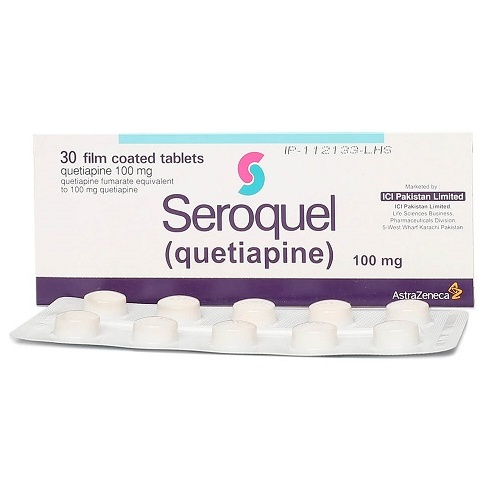
| Name on prescription | Seroquel |
|---|---|
| Main compound | Quetiapine |
| Primary uses | Schizophrenia, Bipolar Disorder, Major Depressive Disorder (as adjunct) |
| Strength forms available | 25 mg, 50 mg, 100 mg, 150 mg, 200 mg, 300 mg, 400 mg (immediate and extended release) |
| How fast does it work? | Initial effects within 1–2 hours (immediate release); therapeutic benefit usually visible in days to weeks |
| How long does it last? | 6–12 hours per dose (immediate release); up to 24 hours (extended release) |
| How to take | Daily, at the same time (usually evening/night); food does not significantly alter absorption |
| Prescription requirement | Prescription only in United States (FDA-regulated) |
| Estimated cost range | Approximately $18–$370 per month (varies by dose, brand vs. generic, pharmacy) |
Seroquel for Mental Health: What to Know in United States
Seroquel, with the active ingredient quetiapine, is a widely prescribed medication for managing conditions such as schizophrenia, bipolar disorder, and as an add-on treatment for major depressive disorder. It is legally regulated and available by prescription across the United States, offering an option for those seeking medical support for mental health challenges. Understanding how it works, for whom it is suitable, and the best way to access treatment can help you take the next step confidently.
Understanding Your Struggle: Mental Health in Perspective
Mental health challenges like depression, bipolar disorder, and schizophrenia affect millions nationwide. According to the National Institute of Mental Health (NIMH), in 2021, about 57.8 million adults in the United States (22.8%) experienced some form of mental illness, with serious mental illnesses such as schizophrenia and bipolar disorder impacting over 14 million people. These conditions can disrupt daily life, relationships, and the ability to function at work or school—but they are treatable, and seeking help is a sign of strength, not weakness. Proven therapies, including medications like Seroquel, play a key role in many treatment plans.
How Seroquel Works: Mechanism and What It Means for You
Seroquel (quetiapine) acts primarily on neurotransmitters—chemical messengers in your brain that influence mood, perception, and thinking. Specifically, it blocks certain receptors for dopamine and serotonin. By moderating these chemicals, Seroquel helps restore balance in brain circuits that are disrupted in conditions such as schizophrenia, bipolar disorder, and depression. For the patient, this often means fewer hallucinations or delusions, stabilization of mood swings, and better sleep patterns.
To break it down: When dopamine signaling is excessive, as in schizophrenia, thoughts and perceptions can become distorted. Quetiapine reduces this excessive signaling. In bipolar disorder, the same medication can lessen severe mood fluctuations by smoothing out both manic and depressive phases. For depression (when used as an adjunct), Seroquel can help when traditional antidepressants are insufficient. Most users begin to notice calming effects within hours, but full benefits for mood and thinking typically develop over several days to weeks.
Is Seroquel Right for You? Recognizable Scenarios and Selection Table
| Your situation | Is Seroquel an option? | Reasoning |
|---|---|---|
| You have a diagnosis of schizophrenia and need stable, daily symptom control | Recommended | Seroquel is approved for treating schizophrenia and helps with both positive (hallucinations) and negative (withdrawal) symptoms |
| You experience episodes of mania and depression (bipolar disorder) | Often prescribed | Seroquel treats both manic and depressive phases, reducing mood swings and risk of relapse |
| You have depression that has not responded to standard antidepressants | Possible add-on | Seroquel may be added as adjunct therapy for major depressive disorder if previous treatments were insufficient |
| You have only mild or situational anxiety, without diagnosed mood or thought disorders | Not advised | Seroquel is not first-line for general anxiety or mild mood disturbances due to risk of side effects and lack of evidence for these situations |
| You are elderly with memory issues (dementia-related psychosis) | Not recommended | Seroquel carries a risk of stroke and death in elderly patients with dementia-related psychosis; alternative treatments are preferred |
If you recognize yourself in one of these scenarios, Seroquel might be discussed as a treatment option with your healthcare provider. The best choice depends on your diagnosis, medical history, and response to past treatments.
Real-World Use: Taking Seroquel in Daily Life
- When to take: Seroquel is usually taken once daily in the evening (for XR/extended release) or twice daily (immediate release), as prescribed. Consistent timing helps maintain stable levels in your body.
- With or without food? Food does not substantially affect absorption, but taking it with a light snack may reduce stomach discomfort.
- Missed a dose? If you forget, take it as soon as you remember unless it’s almost time for your next dose. Do not double up; skip and resume your regular schedule.
- If you don’t feel improvement: It may take a few days to weeks to notice full benefits. Contact your prescriber before making changes or stopping—never discontinue abruptly, as withdrawal symptoms (such as insomnia, nausea, or return of symptoms) can occur.
- Other medications: Always inform your provider about all medications and supplements you use, as interactions can affect safety and effectiveness.
- What is normal, what is not: Mild drowsiness, dry mouth, or lightheadedness can be expected early on. Severe symptoms, such as fainting, severe allergic reaction, or chest pain, are not normal and require prompt medical attention (see below under side effects).
Who Should Not Use Seroquel: Contraindications Explained
Seroquel is not suitable for everyone. Here are situations where it should be avoided, with the reasoning behind each:
- Known allergy to quetiapine or similar drugs: Risk of severe allergic reaction, which can be life-threatening.
- Use in elderly patients with dementia-related psychosis: Increased risk of stroke and death; Seroquel is specifically not approved for behavioral symptoms in these patients (FDA warning).
- Uncontrolled heart rhythm disorders (such as QT prolongation): Seroquel can further increase the risk of dangerous arrhythmias, potentially resulting in sudden cardiac events.
- Concurrent use with potent CYP3A4 inhibitors (ketoconazole, ritonavir): Can cause dangerously high blood levels of Seroquel, leading to toxicity.
- Severe liver impairment: The body may not clear the medication efficiently, increasing the risk of side effects.
Always discuss your full medical history with your provider. Some risks may be managed through monitoring or dose adjustment, but in other cases, an alternative is safer.
What Side Effects to Expect and When to Seek Help
Not everyone experiences side effects, but knowing what to expect can prevent unnecessary worry and help you recognize when to seek medical attention.
- Common and usually mild (often resolve on their own): Drowsiness, dry mouth, dizziness, constipation, lightheadedness when standing up (orthostatic hypotension), mild weight gain.
- Occasional (may need dose adjustment): Restlessness, tremor, increased appetite, mild elevation in blood sugar or cholesterol.
- Rare but serious (contact your doctor promptly): Signs of infection (fever, sore throat, persistent cough), signs of high blood sugar (excessive thirst, frequent urination), severe muscle stiffness, confusion, seizures.
- Signs requiring immediate emergency help: Sudden chest pain, severe dizziness, loss of consciousness, swelling of face or tongue, difficulty breathing, or rash with blisters—these may signal a severe allergic reaction or heart problem. In the United States, call 911 if these occur.
Most side effects are dose-dependent and resolve as your body adapts. Never adjust your dose without consulting your prescriber.
Can Seroquel Be Combined With Other Medications? Interactions to Know
Combining Seroquel with certain medications can alter its effectiveness or increase risk. The most notable interactions include:
- CYP3A4 enzyme inhibitors (such as ketoconazole, erythromycin, some HIV medications): These slow down the breakdown of Seroquel, increasing its levels in your blood—raising the risk of side effects and toxicity.
- Medications that affect heart rhythm (antiarrhythmics, some antibiotics, certain antidepressants): Combining these with Seroquel can heighten the chance of dangerous arrhythmias.
- Other sedating drugs (benzodiazepines, opioids, antihistamines): Can lead to excessive sedation or respiratory depression, which is particularly hazardous if you drive or operate machinery.
- Alcohol: Enhances sedative effects and impairs judgment and coordination; avoid together.
Always give your healthcare provider a complete list of your medications and supplements. Adjustments can often be made to minimize risks, but in some cases, an alternate treatment may be safer.
How Does Seroquel Compare? Alternatives and When They May Suit You Better
| Medication | Common uses | Advantages | Limitations / When not preferred |
|---|---|---|---|
| Seroquel (Quetiapine) | Schizophrenia, bipolar disorder, adjunct in depression | Effective for both mood and psychotic symptoms; sedation can help with sleep disturbances | May cause weight gain and drowsiness; not suitable if history of heart rhythm issues |
| Risperidone | Schizophrenia, bipolar disorder, irritability in autism | Less sedating; good for agitation | Higher risk of movement side effects (tremor, stiffness); may raise prolactin levels |
| Olanzapine | Schizophrenia, bipolar disorder | Strong mood stabilization | Greater risk of weight gain and diabetes; pronounced sedation |
| Aripiprazole | Schizophrenia, bipolar disorder, adjunct in depression | Lower risk of weight gain; less sedation | Can cause restlessness; may be less effective for severe agitation or insomnia |
Seroquel is often selected when a calming effect is desirable, or when co-existing sleep problems make excessive alertness an issue. For patients who are highly sensitive to weight gain, or who have a personal or family history of diabetes, alternatives may be preferred. Your provider will help match the medication profile to your unique situation.
What You Will Actually Pay: Full Cost Breakdown in United States
| Cost item | Amount | Note |
|---|---|---|
| Doctor or psychiatric consultation | $100–$350 | Out-of-pocket, varies by provider and insurance coverage |
| Prescription (if required separately) | $10–$30 | Some clinics charge for prescription writing |
| Seroquel (generic quetiapine) cost per month | $18–$50 | Generic at major US pharmacies; higher for branded Seroquel |
| Seroquel (brand) cost per month | $120–$370 | Varies by dose and pharmacy |
| Home delivery (if ordered online) | $5–$25 | Depends on pharmacy and speed of shipping |
| Total (first month, generic, with in-person visit) | $133–$455 | Doctor, prescription, generic meds, delivery |
| Total (subsequent months, generic, prescription on file) | $23–$75 | Only medicine and delivery |
Costs vary widely depending on insurance, location, and brand vs. generic. Many US pharmacies accept insurance or offer discount programs. Telemedicine services may provide faster access, sometimes bundled with the cost of the prescription. A legal prescription is mandatory for purchase in the United States; while some online sources claim to provide Seroquel without a prescription, this is not in line with FDA regulations and carries legal and safety risks.
Addressing Remaining Concerns: What If My Symptoms Change or I Want to Stop?
Mental health symptoms can evolve—sometimes for the better, sometimes with new challenges. If you notice changes in mood, new or worsening side effects, or if you feel your medication is no longer working, do not stop Seroquel on your own. Abrupt discontinuation can trigger withdrawal symptoms or rapid return of illness. Instead, contact your provider for a supervised plan, which may involve a gradual dose reduction or switch to an alternative.
If you’re planning a major life change (pregnancy, surgery, travel), or need to adjust your regimen, advance consultation is critical—medication needs can shift during these times. For urgent or severe reactions (such as sudden fainting, severe allergic response, or suicidal thoughts), seek emergency care immediately—call 911 in the United States.