
- Home/
- Buy Propecia in Online Pharmacy for United States Customers
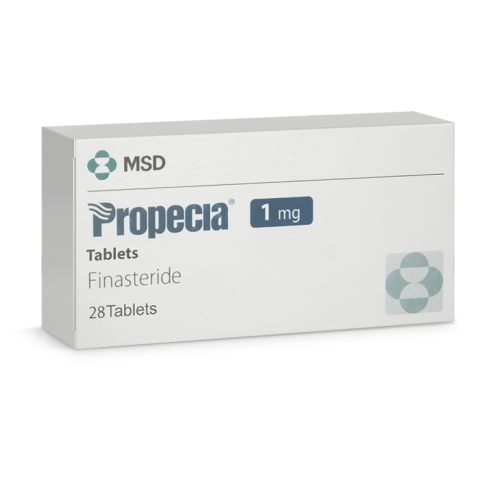
| Product Name | Propecia |
|---|---|
| Key compound | Finasteride |
| Main use | Male pattern hair loss (androgenetic alopecia) |
| Formulations available | 1 mg film-coated tablets |
| How quickly effects appear | 3 to 6 months of consistent daily use |
| How long results last | Effects continue with ongoing use; hair loss may resume if stopped |
| Daily regimen | 1 mg taken once per day |
| Legal status in United States | Prescription required (FDA approved) |
| Typical price range | $60–$100 for a 30-day supply (may vary) |
Propecia for Hair Loss: What to Know in the United States
Propecia is a prescription medication used to treat male pattern hair loss, containing the active ingredient finasteride. It is legally available in the United States with a doctor’s prescription and is intended for adult men experiencing gradual hair thinning or loss on the scalp. Below you’ll find answers to every stage of considering, choosing, and using Propecia for hair regrowth.
Hair Loss Is Common—and Often Treatable
Male hair loss can feel isolating, but it’s a reality faced by millions. According to the American Academy of Dermatology (AAD), over 50 million men in the United States experience some degree of androgenetic alopecia, commonly known as male pattern baldness (AAD, 2024). This form of hair thinning typically starts at the temples or crown and progresses gradually. Despite its prevalence, many are unaware that effective medical treatments are available and regulated for safety by the U.S. Food and Drug Administration (FDA). Knowing that you’re not alone—and that solutions exist—can make the next steps clearer and less stressful.
How Propecia Acts on Hair Loss: The Science and Its Real-Life Result
Propecia works by targeting a specific cause of male pattern baldness: the hormone dihydrotestosterone (DHT). In many men, DHT shrinks hair follicles, gradually making hair finer and causing it to fall out. Finasteride, the compound in Propecia, blocks the enzyme (5-alpha reductase) that converts testosterone into DHT. The direct effect: lower DHT levels in the scalp. The practical result: hair follicles are less likely to shrink, so hair loss slows, and in many cases, new hair grows.
You won’t notice changes overnight. Most people see results after 3 to 6 months of daily use, with maximum benefit often visible at around 12 months. If treatment is stopped, DHT levels return to baseline, and hair loss resumes. That’s why Propecia is a long-term, ongoing therapy for those who benefit.
Does Propecia Suit Your Situation? Practical Scenarios
| Your situation | Is Propecia appropriate? | Why or why not? |
|---|---|---|
| You are an adult man with gradually thinning hair at the temples/crown | Yes | This is the classic pattern for which Propecia is most effective |
| You are noticing sudden, patchy hair loss | No | Sudden hair loss could signal a different condition; see a dermatologist first |
| You are under 18, or are a woman | No | Propecia is not approved for women or minors, and may be unsafe |
| You have tried topical treatments (like minoxidil) with little result, and want a pill | Possibly | Propecia may help if topical options were ineffective; a doctor can advise on switching |
| You are planning to conceive a child in the near future | Use caution | Finasteride is not recommended when trying to conceive due to potential risk of birth defects if handled by pregnant women |
These examples reflect real-life situations. If you aren’t sure which category you fall into, a consultation with a hair loss specialist or dermatologist can clarify the best approach.
Taking Propecia: Day-to-Day Guidance and What to Expect
- Dosing: Take one 1 mg tablet once daily, with or without food. Consistency is key for effectiveness.
- If you miss a dose: Take the next dose as scheduled; do not double up to make up for a missed tablet.
- Visible changes: Hair shedding may decrease after 3 months. Regrowth or thickening is usually noticed between 6 and 12 months.
- If you stop: Hair loss typically returns within 9–12 months of discontinuing treatment.
- What if it’s not working: If there’s no visible improvement after 12 months, discuss alternative treatments or underlying causes with your doctor.
- Storage: No special storage required beyond a dry, room-temperature place away from children.
Unlike some medications, Propecia is not affected by meals, alcohol, or most routine activities. It is, however, important not to share your tablets, especially with women or children, due to specific risks.
Who Should Not Use Propecia?
Propecia is not for everyone. Those who should avoid it include:
- Women and children: Not approved for use because exposure can cause birth defects in male fetuses and there is no proven benefit.
- Men with severe liver disease: The drug is processed by the liver, and impaired function can increase risk of adverse effects.
- Individuals with a known allergy to finasteride: Previous hypersensitivity means increased risk of severe reactions.
If you have any uncertainty—such as a history of liver problems—discuss your full medical history with a healthcare provider before starting Propecia.
Potential Side Effects: What’s Expected and What’s Rare?
- Common and usually mild: Decreased libido, erectile difficulties, or reduced semen volume (affecting 1–10% of users). These effects often resolve with continued use or after stopping the medication.
- Uncommon but notable: Breast tenderness or enlargement, rash, or testicular pain. If these occur, seek medical advice.
- Very rare but serious: Allergic reactions, such as swelling of lips/face, difficulty breathing, or skin blistering. These require immediate medical attention—call 911 in the United States if severe allergic symptoms occur.
Most users tolerate Propecia well, but any persistent or distressing side effect should prompt a review with your doctor. The majority of side effects fade when the drug is discontinued. If anything feels severe or unusual, do not hesitate to get medical help.
Interactions With Other Medications and Substances
Finasteride is unlikely to interact with most routine medications, as it is not known for causing major drug-drug interactions. However, always inform your doctor and pharmacist about any other prescription drugs, over-the-counter medications, or supplements you take. Special caution is needed if you are using other hormonal therapies or drugs that affect liver metabolism. Discuss all current medications to avoid unforeseen issues.
How Does Propecia Compare to Other Hair Loss Treatments?
| Treatment | How it works | Who benefits most | Limitations |
|---|---|---|---|
| Propecia (finasteride) | Reduces scalp DHT, slows hair loss, can regrow hair | Men with pattern baldness, especially early to moderate stage | Requires ongoing daily use; effects reverse if stopped; not for women |
| Minoxidil (topical solution or foam) | Improves blood flow to hair follicles, stimulates growth | Men and women with mild to moderate thinning | Must be applied twice daily; can irritate scalp; results vary |
| Hair transplant surgery | Moves hair follicles from dense areas to balding zones | Those seeking permanent cosmetic solution | Costly; surgical risks; requires enough donor hair |
| Dutasteride (off-label for hair loss) | Blocks both type I and II 5-alpha reductase | Men not responding to finasteride | Not FDA-approved for hair loss; higher risk of side effects |
Propecia remains the only oral prescription medication FDA-approved for male pattern baldness. For many, it is the most convenient and effective option, especially when hair loss is detected early. However, it is not universally effective—about two-thirds of men see improvement, according to regulatory trial data (FDA, 2024). Combining Propecia with topical minoxidil is common, especially if monotherapy is not sufficient. Surgical and other options exist for those with advanced loss or who do not respond to medication.
Propecia Costs and How to Purchase in the United States
| Expense type | Typical amount | Context |
|---|---|---|
| Physician consultation (in person or telemedicine) | $50–$150 | Required for prescription issuance |
| Prescription processing fee | $0–$20 | Some clinics and online platforms may charge this |
| Propecia (finasteride 1 mg, 30 tablets) | $60–$100 | Brand-name; generics (finasteride) start at $10–$30 |
| Mail delivery | $0–$15 | Standard shipping for online/telemedicine orders |
| Total | $60–$285 | Minimum (generic, no consultation fee) to maximum (brand, in-person visit) |
You can purchase Propecia legally in the United States only with a doctor’s prescription, as required by the FDA. Pharmacies—both retail and online—can dispense the medication after receiving the prescription from a licensed healthcare provider. Online telemedicine services (regulated at the state level) offer a streamlined option, often including medical evaluation and direct shipping to your home. Prices vary by pharmacy, region, and whether you select the brand-name or a generic equivalent. Insurance rarely covers Propecia for hair loss, so most costs are paid out of pocket.
What If You Still Have Doubts?
Some questions may linger: What happens if you want to stop treatment? Are generics truly equivalent? Is there a risk of persistent side effects? If you discontinue Propecia, any hair gained or preserved is typically lost over the subsequent months—the process reverses, but no “rebound” hair loss occurs. FDA-approved generics (finasteride 1mg) must meet the same standards as the brand; they differ only in inactive ingredients and packaging. As for persistent side effects (sometimes called “post-finasteride syndrome”), clinical data is mixed and ongoing, but most men do not experience lasting problems after stopping the drug. If you are concerned, discuss these issues openly with your prescribing provider—transparency is essential for long-term treatment satisfaction.